
Single-Mode vs Multi-Mode Optical Transceiver Modules: Which One Fits Your Network?
Choosing the wrong optical transceiver module wastes money in two directions. Buy single-mode when you only need 50 meters of reach, and you overpay for distance you'll never use. Buy multi-mode when your link runs 20 kilometers, and the signal simply won't arrive. This guide breaks down the real difference btween single-mode and multi-mode optical transceivers, so system integrators, distributors, and OEM buyers can match the right SFP optical transceiver to the right job.

Single-Mode Optical Transceivers: Built for Long-Haul Reach
Why Single-Mode Travels Farther
Single-mode fiber uses a narrow 9-micron core that carries a single light path, so there's far less scattering and distortion than a wider core allows. It also holds onto its signal much longer thanks to its longer operating wavelengths, which means attenuation builds up more slowly per kilometer. As a result, single-mode optical transceivers can push a usable signal 20 to 40 kilometers before it needs regeneration.
Where Single-Mode Fits: Long-Haul and Backbone Links
Choose single-mode when your link spans buildings, campuses, or cities, since only single-mode fiber carries a usable signal past a few hundred meters. Utility substations, carrier backbones, and inter-campus links all depend on long, uninterrupted fiber runs — a distributor connecting two data halls three kilometers apart cannot rely on multi-mode fiber optic transceiver modules at all, because the signal loss over that distance exceeds what multi-mode optics can recover.
BiDi Single-Mode Modules Cut Fiber Costs
Bidirectional (BiDi) single-mode transceivers send and receive on a single fiber strand instead of two, using two different wavelengths in each direction. A project with 100 duplex links needing 200 fiber strands only needs 100 strands with BiDi modules, since each strand carries both directions at once. This directly cuts fiber procurement and installation cost, which matters most in long-haul or leased-fiber deployments.
Multi-Mode Optical Transceivers: Built for Short-Reach Savings
Why Multi-Mode Has a Shorter Reach
Multi-mode fiber uses a wider core (usually 50 microns) that carries multiple light paths at once, which causes modal dispersion as rays bounce at slightly different angles over distance. Combined with its shorter operating wavelength, multi-mode loses signal strength noticeably faster per kilometer than single-mode. As a result, multi-mode transceivers typically max out between 100 and 550 meters.
Where Multi-Mode Fits: Short-Reach and In-Building Links
Multi-mode makes sense whenever your link stays under roughly 300 meters, covering most rack-to-rack and floor-to-floor connections inside a single building. Server rooms, top-of-rack switch connections, and campus LAN cores are classic multi-mode territory, and multi-mode fiber commonly serves data centers, local area networks, high-performance computing centers, and storage area networks at these distances.
Multi-Mode Transceivers Cost Less Per Link
Multi-mode transceivers use VCSEL (vertical-cavity surface-emitting laser) light sources, which cost less to produce and consume less power than the precision lasers single-mode optics require. Single-mode transceivers generally cost more than multi-mode transceivers, since multi-mode's lower-precision components and reduced power draw give it a lasting cost edge in short-reach deployments.

Comparing Reach, Cost, and Use Case at a Glance
The single-mode versus multi-mode decision comes down to core size, which determines how far a signal can travel and how much the optics cost. Single-mode's narrow core and longer wavelength favor distance, while multi-mode's wider core and VCSEL source favor a lower price per link. The table below lines up both fiber types side by side so you can match reach, cost, and use case to your project in one glance.
Factor | Single-Mode Transceiver | Multi-Mode Transceiver |
Core size | 9 microns | 50 microns |
Typical reach | 20–40+ km | 100–550 m |
Light source | Distributed feedback laser | VCSEL |
Relative cost | Higher | Lower |
Best use case | Backbone, WAN, metro, substation | Data center, LAN, HPC rack links |
Single-Mode vs Multi-Mode — How Do You Decide for Your Specific Project?
Start by mapping every link in your network against its physical distance, then sort each one into a single-mode or multi-mode bucket before ordering any hardware. This step alone prevents the most common procurement mistake: buying one optic type for an entire project when link lengths actually vary.
Sorting Links Into the Right Fiber Type
List every planned connection with its measured or estimated distance, then compare each figure against the 300-meter multi-mode ceiling. Any link under that threshold is a multi-mode candidate, because the cost savings hold as long as reach stays within range. Any link beyond it moves into the single-mode column by default, since multi-mode simply cannot maintain signal integrity that far.
Under 100 m: multi-mode is almost always the better choice
100–300 m: multi-mode still works, but check the specific module's rated reach
Beyond 300 m: single-mode is required, regardless of budget preference
Distributor and OEM Buyer Approach for Mixed Deployments
Distributors and OEM/ODM customers should ask suppliers for both single-mode and multi-mode options within the same connector and monitoring standard, so end customers can order one catalog instead of matching parts across vendors. This reduces support tickets, since compatible DDM (digital diagnostic monitoring) reporting and consistent connector types simplify field replacement.
Why Choose Wintop for Your Optical Transceiver Modules
Founded in 2004, Wintop is a high-tech manufacturer specializing in the R&D, manufacturing, and sales of optical modules and fiber optic transceivers. Today, the company serves customers in more than 40 countries and regions, operates a 10,000-square-meter manufacturing facility, and has accumulated more than 60 technology and invention patents.
Wintop's product lineup covers both sides of the single-mode versus multi-mode decision:
WT-SFP+-BU-20— delivers 10G single-mode BiDi transmission up to 20 kilometers on one fiber strand.
WT-SFP+-BU-40 and WT-SFP+-BD-40— extend that same BiDi approach to 40 kilometers, with paired wavelengths (1270nm/1330nm and 1330nm/1270nm) so opposite ends of a link work together correctly.
WT-SFP+-SR— uses an 850nm VCSEL source over multi-mode fiber for links up to 300 meters, suited to in-building and rack-level connections.
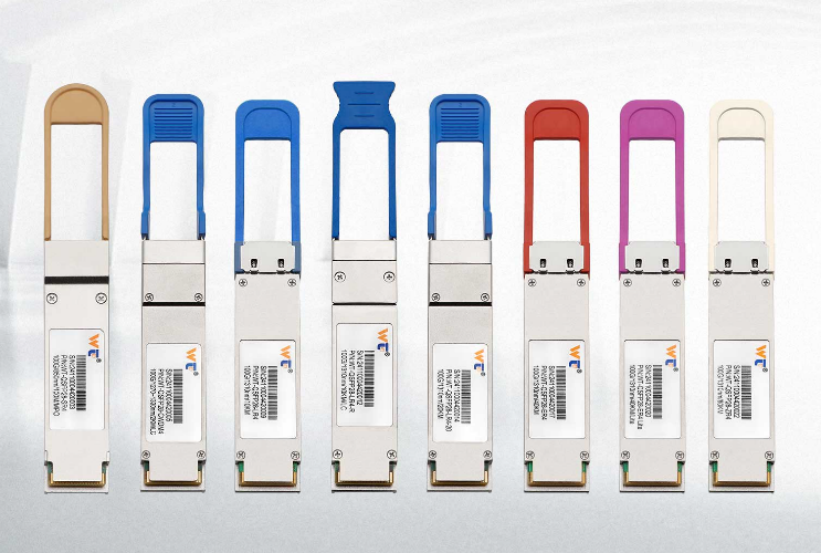
That kind of consistency across a product line is really what the single-mode versus multi-mode decision comes down to in practice: distance dictates the choice, with links across buildings, campuses, or cities needing single-mode, while links within a single room or rack row are better served by multi-mode. Cost, power draw, and fiber strand count all follow from that one choice. Sourcing both types from a manufacturer like Wintop keeps testing, DDM monitoring, and support consistent across an entire fiber plant.