
What Are the Emerging Trends Shaping the Transceiver Manufacturing Industry in 2026?
The rapid evolution of digital infrastructure is pushing the demand for faster, more reliable, and energy-efficient communication networks. As enterprises, data centers, and industrial systems continue to expand their connectivity requirements, we are seeing major changes across the global optical communication market. Transceiver manufacturers are focusing on advanced technologies that support higher bandwidth, longer transmission distances, and stronger network reliability.
From artificial intelligence applications to smart grids and next-generation data centers, optical transceiver technology has become a critical foundation for modern networking. Companies need solutions that can handle increasing data traffic while maintaining stable performance in complex environments. These market demands are driving innovation in optical modules, fiber connectivity, and intelligent network equipment.
Higher-Speed Optical Connectivity Drives Transceiver Innovation
One of the most significant trends among transceiver manufacturers in 2026 is the continued transition toward higher-speed communication solutions. The growth of cloud computing, AI workloads, and large-scale data processing is creating demand for optical modules that can support faster data transmission with lower latency.
Traditional network technologies operating at lower speeds are being upgraded to 100G, 200G, 400G, and even higher-speed optical communication solutions. Enterprises and data centers are upgrading their infrastructure to improve data handling capabilities and ensure future scalability. As a result, optical transceiver suppliers are investing heavily in research and development to create products with better signal integrity, higher efficiency, and improved thermal management.
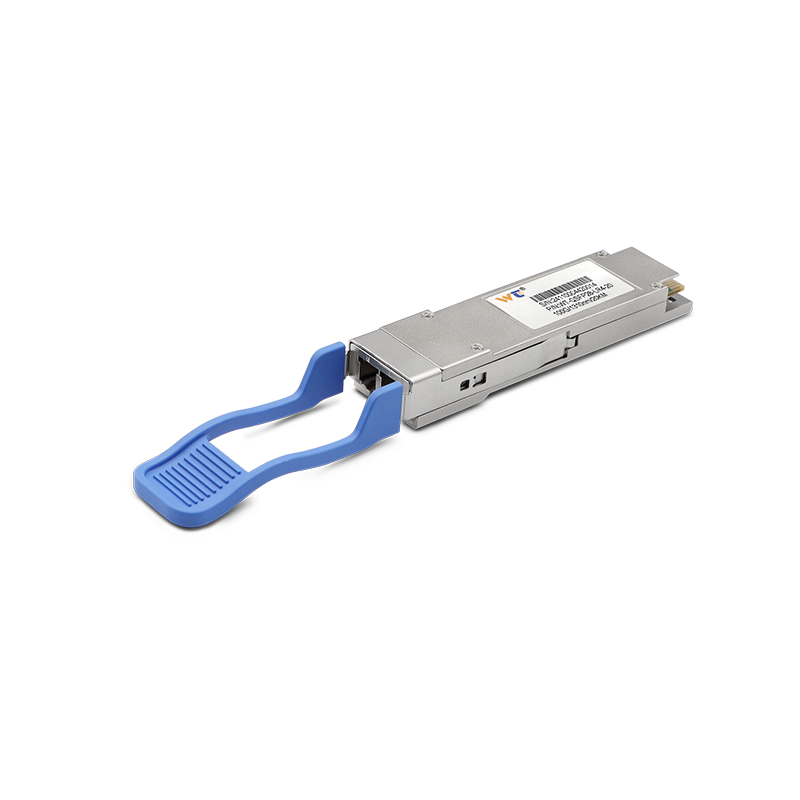
High-speed modules such as QSFP28 transceivers are becoming increasingly important in modern network environments. These solutions enable reliable high-bandwidth connections while maintaining compatibility with existing fiber infrastructure. For example, 100GBase-LR4 QSFP28 transceiver modules are designed for long-distance optical communication and are widely used in data centers, telecom networks, and industrial applications.
Our WT-QSFP28-LR4 100GBase-LR4 QSFP28 Transceiver for SMF supports a transmission distance of up to 10 km on single-mode fiber (SMF). It supports 103.1 Gb/s total data rates, with each lane reaching a 25.78 Gb/s bit rate. Equipped with LAN WDM DFB laser technology and a PIN receiver, this module provides stable optical performance for demanding network environments.
Energy Efficiency Becomes a Key Focus for Optical Module Development
As network infrastructure continues to grow, energy consumption has become a major consideration for businesses and technology providers. Modern transceiver manufacturers are not only focused on increasing speed but also improving power efficiency to help customers reduce operational costs.
Data centers and industrial networks often contain thousands of optical modules operating continuously. Even small improvements in power consumption can create significant energy savings across large-scale deployments. Therefore, manufacturers are developing optical modules with optimized circuit designs, improved components, and better heat dissipation technologies.
Energy-efficient optical solutions also support global sustainability goals. Businesses are increasingly looking for networking equipment that delivers strong performance while reducing environmental impact. This trend is encouraging manufacturers to balance transmission capacity, reliability, and power consumption during product development.
Beyond efficiency, industrial applications require optical modules that can operate under challenging conditions. Smart substations, transportation systems, and industrial automation networks need communication components with strong stability and durability. Manufacturers are responding by improving product testing standards and developing industrial-grade optical solutions.
Intelligent Networks Expand Opportunities for Optical Transceiver Applications
The expansion of intelligent infrastructure is another important trend influencing the future of the transceiver industry. Smart cities, renewable energy systems, industrial automation, and advanced monitoring platforms all require dependable communication networks.
Optical transceivers play an essential role in these applications because fiber-optic communication offers high bandwidth, long-distance transmission, and strong resistance to electromagnetic interference. These advantages make optical modules suitable for environments where network reliability is critical.
Smart substations are a clear example of this development. Power infrastructure is becoming more digital, requiring stable data communication between control systems, monitoring equipment, and protection devices. Reliable optical networking solutions help ensure real-time information exchange and improve operational efficiency.
As a result, transceiver manufacturers are increasingly developing customized solutions for industrial customers. Instead of offering only standard products, many manufacturers now provide solutions designed around specific application requirements, including transmission distance, environmental conditions, and network architecture.
Quality Control and Technical Expertise Shape Industry Competition
With increasing demand for advanced optical networking products, quality control and technical capability are becoming important factors when companies select suppliers. Optical modules must meet strict performance requirements because network failures can lead to significant operational disruptions.
Professional manufacturers are strengthening their testing processes, production management systems, and research capabilities to ensure consistent product quality. Certifications, reliability testing, and continuous innovation are becoming essential competitive advantages in the optical communication market.
For businesses purchasing optical modules, choosing experienced suppliers helps reduce deployment risks and improve long-term network performance. A reliable supplier should provide not only high-quality products but also technical support, customization capabilities, and a deep understanding of different application environments.
As one of the trusted transceiver manufacturers, we focus on combining advanced technology with strict quality management. Our solutions are designed to support demanding industrial and commercial networking requirements while helping customers build stable communication infrastructure.
Building the Future of Optical Communication with Wintop
The transceiver manufacturing industry is entering a new stage driven by higher speeds, greater efficiency, intelligent applications, and stronger reliability requirements. Businesses across industries need optical networking solutions that can support current demands while preparing for future technological growth.
We at Wintop are a trusted transceiver manufacturer and network equipment supplier, specializing in the R&D, production, and sales of optical modules and switches. From SFP transceiver modules to high-speed optical interconnects, we deliver reliable fiber-optic network equipment for more than 1,000 smart substation deployments across over 40 countries. Backed by 60+ core technology patents and rigorous industrial-grade quality standards, we are committed to providing dependable connectivity solutions for global customers.
Our WT SFP Transceiver Module series and WT-QSFP28-LR4 100GBase-LR4 QSFP28 Transceiver demonstrate our focus on performance, stability, and advanced optical communication technology. Contact Wintop today to explore reliable transceiver solutions designed for your next-generation network infrastructure.